
Materials that have a small particle size and large specific surface area are sensitive to ambient conditions such as relative humidity, temperature, electrostatic effects and to their own moisture content, compaction, agglomeration etc.
Therefore for accurate and reproducible results, a system controlling the test atmosphere within a narrow range of temperature and humidity must be available with environmental conditions across all comparative analysis.
- relative humidity (RH): (40 ± 5) %;
- temperature: (25 ± 2) °C;
- electrically grounded testing systems
Having constructed a Toxics Release Facility capable of maintaining strict environmental controls, Reddwall Solutions is pleased to offer not only the dustiness testing systems needed, but also the protocols necessary to properly simulate powder processing and handling activities. Having tested this system extensively, we recommend that it represents the best available technique for the comparative analysis of relative dust release potential in bulk materials.
ISO Dust Standards – Dustiness Testing


Dustiness depends on a number of factors including:
- the surface properties including electrostatics, stickiness, fracturing maturity, porosity and cohesion,
- the physical state of the bulk material (e.g. powder, granules, pellets and moisture content),
- the physicochemical properties of the particles contained in the bulk material (e.g. particle size and shape, moisture content, powder mass, relevant density, type of coating, hydrophobicity and hydrophilicity properties, adhesive forces, aggregation of particles),
the environment (e.g. moisture, temperature), - the condition of the bulk material,
- the type of aerosol generation (activation energy or energy input, time characteristics of the energy input),
- the interaction between particles during agitation (e.g. friction shearing, van der Wall forces), and
- the sampling and measurement configuration.
ISO Dust Standards – Dustiness Testing

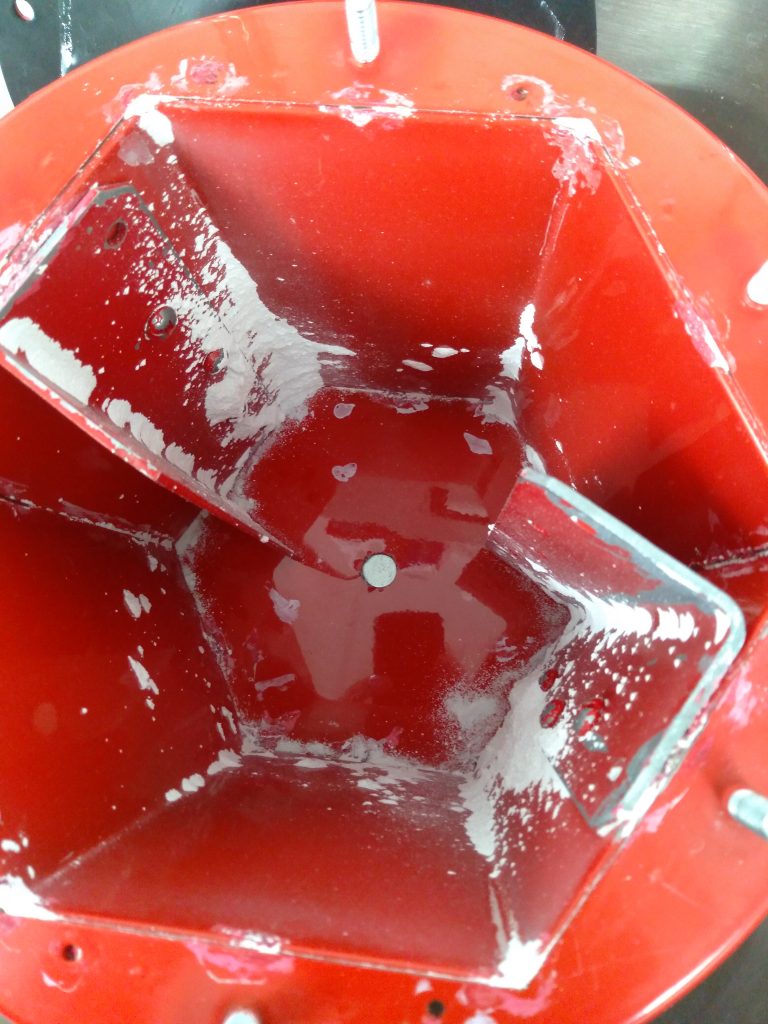
Test powder. According to Chambers (1992) a measure of a material’s dustiness cannot be obtained simply from knowledge of particle size distribution. This means that it’s difficult to compare dustiness results from one type of powder to the next. Basically, the best data derive from a comparative analysis of like materials.
Mass. For coarser non-agglomerating materials, dependence of the dustiness factor on sample mass is evidenced by an increase in the dust concentration as sample mass either goes to “0” or exceeds the material’s ability to agglomerate (elevated mass levels). As a result, the true dustiness value occurs within the weight region showing a linear pattern of aerosolization. Materials revealing the opposite phenomenon are generally fine to ultra-fine highly-agglomerating products with significant particle-particle interaction. For these products, aerosolization occurs along a bell curve of starting and ending weights.
Sampling flow rate. Because the majority of Dustiness Testing Systems were designed to test nanomaterials and not industrial products, they are generally non-compliant with NIOSH sampling methods for both total and respirable dusts. Given the need to conduct valid comparative analysis of industrial powders and materials, Reddwall Solutions has chosen to utilize NIOSH flow rates of 2.0lpm for total dust and 2.5lpm with an Aluminum Cyclone for respirable dusts.
Sampling time. To assure the validity of comparative analysis between materials, sampling times must remain consistent from one sample to the next. While the majority of dustiness testing systems operated with sampling times in the sub-minute range (5sec – 30sec) and notably high flow rates of 50lpm or more, we’ve adopted NIOSH sampling requirements which necessitate lower flow rates and a processing period of at least 60 minutes. Thus, we’ve chosen this run time as our ongoing standard so results are more comparative with those of industrial processes and handling activities.
ISO Dust Standards – Dustiness Testing
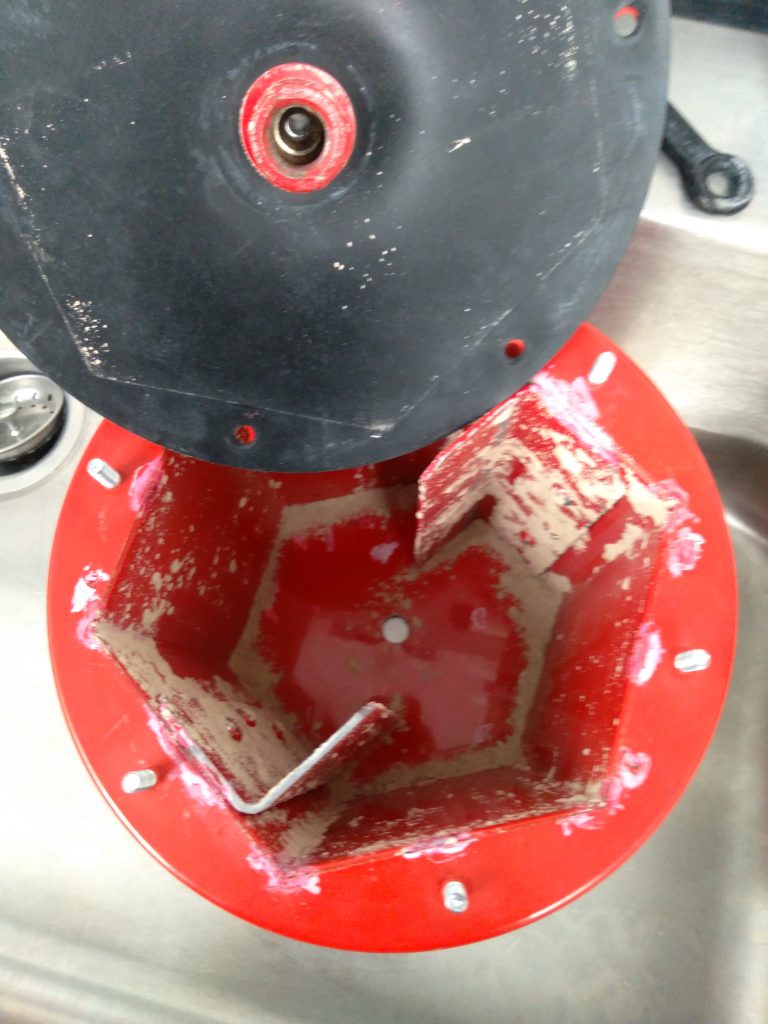

When submitting test samples, the material should first be extracted from the As-Processed bulk material using a either Cone & Quarter or grab sample technique which results in representative sampling. Material extracts should also be packaged and delivered in air-tight containers so they can be tested in the state in which they were processed (moisture content, particle size distribution, etc).