Blank Line
The Latest Antimicrobial Innovation
Reddwall Solutions is pleased to offer a modified version of the AATCC TM211-2021 Urease Inhibition assay to quantitatively assess odor control claims for antimicrobial products and articles. This technique, originally developed to test the viability of antimicrobial textiles, is an objective method to articulate the efficacy of microbiological control technologies in as little as 48 hours.
With the demand for antimicrobial treatments growing steadily, more key players are engineering these strategies into their performance finishes. Particularly since most consumers indicate that antimicrobial treatments are synonymous with perceived healthiness.
Blank Line
Quantitative Proof of Antimicrobial Capabilities
Leading manufacturers, offering antimicrobial product and article surface coatings have adopted a broad spectrum of organic, inorganic and organometallic microbial control technologies to help overcome the social, economic and environmental consequences of unsanitary surfaces. These abatement strategies include the integration of antimicrobial formulations, proven to help fight the growth of microbes — such as bacteria, mold and mildew — on materials. Technologies which work on the premise that keeping microbial populations low diminishes metabolic activity and ultimately, uncleanliness. Alternatively, capture technologies exist within which these protective barriers trap and neutralize microbes, without interfering with the microbial metabolic pathways or growth.


Until development of TM211, antimicrobial surface treatments didn’t have an effective and objective method for directly measuring microbial reduction or a means of quantitatively communicating these benefits to users. Previous testing has focused on the impact that antimicrobials have on bacterial populations, with the inference these broad-spectrum technologies will effectively treat common microbial flora. Therefore, when a technology is shown to reduce microbial populations — some of which could cause deleterious health effects or odors — it is simply reasoned that the production of undesirable microbial activities will be lessened.
Historical testing methods failed clearly indicate the extent of the antimicrobial capabilities or show the tangible benefits of inhibiting microbial numbers. For example, Colony counting can be conducted, but represents an arduous task that can take researchers many days to complete, and only yields dead/live accounts of microbial viability, without investigating modes or mechanisms of attack. Without fully understanding the power of these technologies for reducing microbial populations, manufacturers may overuse or underestimate the quantity of antimicrobial additives that are required to meet their guidelines, potentially adding to economic and environmental costs. In addition, the enumeration of bacterial populations is only appropriate for antimicrobial technologies and cannot be applied to capture strategies that fail to inhibit microbial activity, but instead, use an alternative approach such as neutralizing the contamination and odors that can be a consequence of bacterial metabolism. The problem of undesirable surface and aerosol contaminants requires a multi-faceted approach and testing methods need to consider not only the growth of microorganisms, but also retention and the types of volatile compounds that cause concerns, to give a definitive description of control capabilities. Implementing an industry-wide method that uses a biological system to replicate real-world microbial chemical production gives more conclusive answers to the efficacy of all these technologies.
Blank Line
Efficacy Testing of Manufactured Surfaces
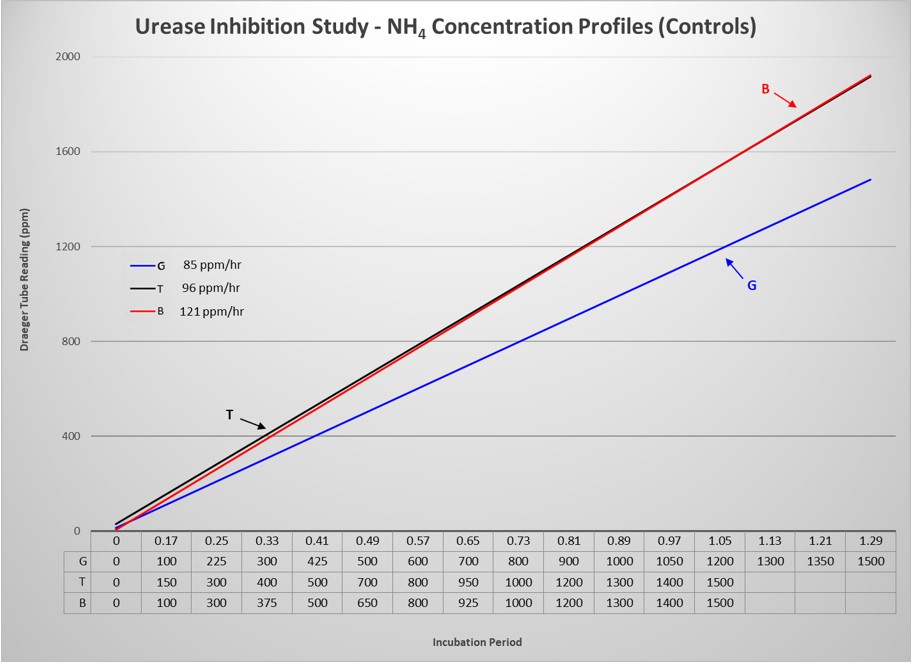
The AATCC test method offers a novel and objective means of articulating the value of microbial control strategies and provides definitive, scientific evidence of microbial reduction claims, helping to support regulatory and product registration efforts while also clearly communicating the benefits to consumers. This highly sensitive test gives real-time and visual depictions of ammonia levels — a pungent and volatile odorous compound that is created when urease catalyzes the hydrolysis of urea in bacterial metabolic pathways — on a colorimetric scale and as a comparative analysis with untreated or competitive products, in under 48 hours. The straightforward method of preparing and inoculating the test material in a sealed flask, allowing the bacteria to grow for 18-22 hours, and then collecting the ammonium gas in a Drager gas detector tube for the next eight hours, has been adopted worldwide.


Unlike other analytical methods that introduce a synthetically produced odorant, this biological system measures the reduction of an odorant that is microbially generated to represent real-world benefits to the user. Two known ammonium-producing bacteria can be used to implement the method, gram-positive Staphylococcus saprophyticus and gram-negative Proteus vulgaris, both of which are excellent surrogates for assessing odor development. While the technique was originally designed for quantifying microbial control propensity of both antimicrobial-based technologies and other microbial capture techniques in the textile industry, Reddwall Solutions adapted it to allow testing of solid antimicrobial products. We also have licensing to process both microbial approaches and welcome the opportunity to demonstrate their effectiveness across a range of antimicrobial surface treatments.
Blank Line
Antimicrobial Surface Treatments – Performance Testing
Blank Line
The microbiological methods offered by Reddwall Solutions can be applied to manufacturing quality control procedures, as well as product development programs. In this latter realm, ongoing testing enhances product value by defining the concentration of antimicrobial additives needed for sufficient microbial reduction. Manufacturers have a corporate responsibility to quantify the benefits of their antimicrobial technologies with sound scientific research and this sensitive test method demonstrates how these microbial controls add real value to the end product.

Blank Line
Microbial control and capture technologies have long been used to help overcome environmental and economic costs while improving customer satisfaction. However, measuring these capabilities has been challenging, without clear answers on how to communicate the benefit of reducing microbial growth to the everyday consumer. By modifying the AATCC TM211-2021 test to accommodate surface treated solids, products and articles, Reddwall Solutions can truly quantify the actual value of microbial control technologies, showing that they are meaningful and something that industry should continue to adopt as consumers seek sustainable solutions.