Call us Today at 412-514-6045
GHS COMPLIANT PRODUCT RECLASSIFICATION
What Can XRC(M) do for You?
Scientific Hazard Inversion
Reddwall Solutions provides a high tech, step-by-step approach to fully characterizing client products and to quantifying the potential hazards which exist (such as percent Respirable Crystalline Silica) by using XRC(M). This multi-level process uses X-Ray Diffraction (X) Raman Spectroscopy (R) Computer Controlled Scanning Electron Microscopy (C) and Inductively Coupled Plasma (M) to accurately assess the bioavailability of ingredients.
Reddwall Solutions Services
Detection of Total and Respirable Crystalline Silica (<5μm and <10μm) to a threshold level as low as <0.01 weight% is now routinely achievable utilizing our hazard inversion protocols
Reddwall Solutions Services
Breaking it Down
The product is first characterized to determine component content and these results used to identify ingredients leading to hazard classification.
Once characterized, the respirable fraction of hazards such as crystalline silica, titanium oxide and carbon black are isolated using the scientifically validated Vacuum Filtered Fractionation (VFF) technique and quantified using internationally recognized methods such as XRD, CCSEM and Raman Spectroscopy.
If the product contains potentially hazardous metals or chemicals, it is processed through our leading-edge environmental and biological leaching protocols to assess leachability/bioavailability under normal conditions of use and in case of extreme upset.
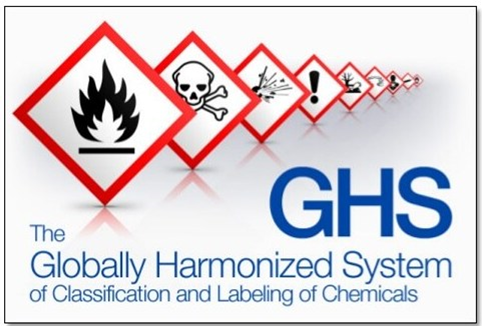
Once all of the important toxicological relevance has been assessed, the appropriate GHS, HazCom 2012, WHMIS, REACH and Prop-65 documentation can be prepared and distributed.
Business Impact
- Decreases product development and SDS document management cost.
- Requires fewer engineering controls and worker protection measures.
- Eliminates the need for Emergency Response/Spill Control Plans and compliance with CWA, RCRA, CAA, and other hazardous material regulations.
- Products are exempted from hazardous shipping rules, decreasing costs and easing management hassles at both shipping and destination facilities.
- Decreases regulatory reporting since the product is not classified as a hazardous material.
- No warning provisions, concerns, or GHS compliance necessary for destination countries.
- Offers a competitive advantage over other products.
Blank